
The Workshop: A Workbench of History and Patience

Turning century-old raw material into prayer beads

Step I • Selection

Selecting the Raw Material

Careful selection of original Ottoman-era pressed amber, faturan and old turquoise pieces. Density, colour tone and surface ageing are checked.
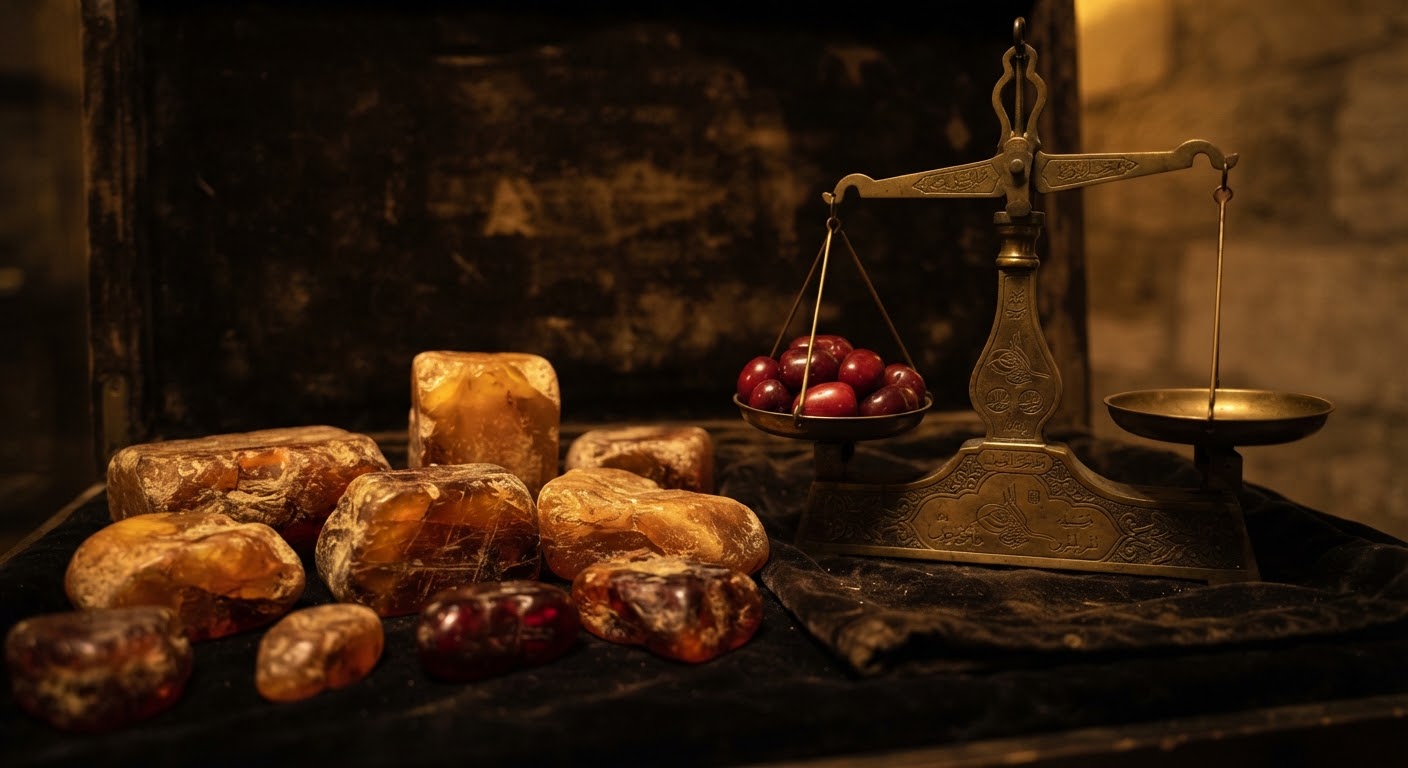
Criterion Surface ageing and veining
Origin 19th-century Ottoman blocks
Ottoman Pressed Amber · Century-Old Block
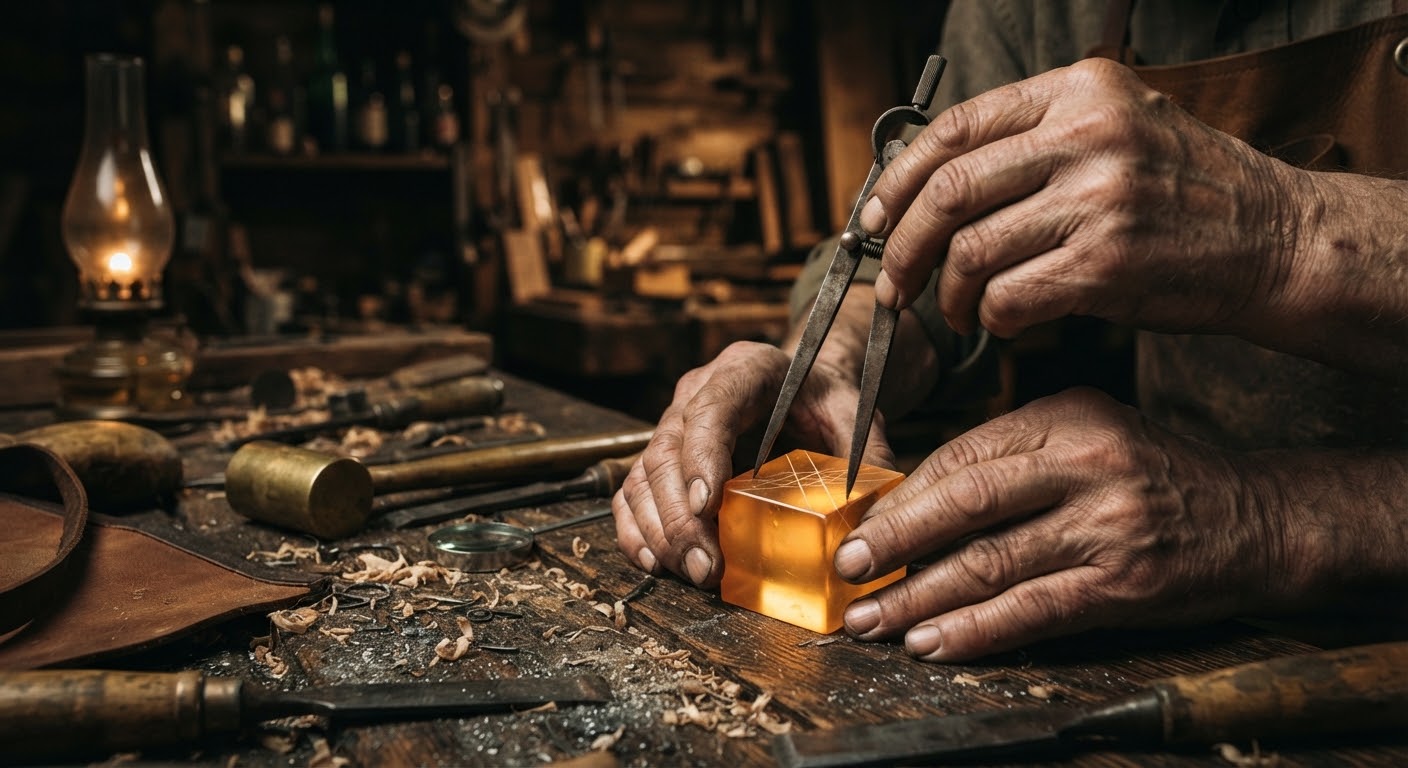
Measuring · Cutting into Cubes
Step II • Cutting

Cutting and Roughing Out

Each block is sliced into cubes with a saw, calculating the direction of every bead's veining and pattern. No material is wasted.

Method Cold Cutting with a Jeweller's Saw
Principle Preserving the harmony of veining and pattern
Step III • Lathe

Shaping on the Lathe

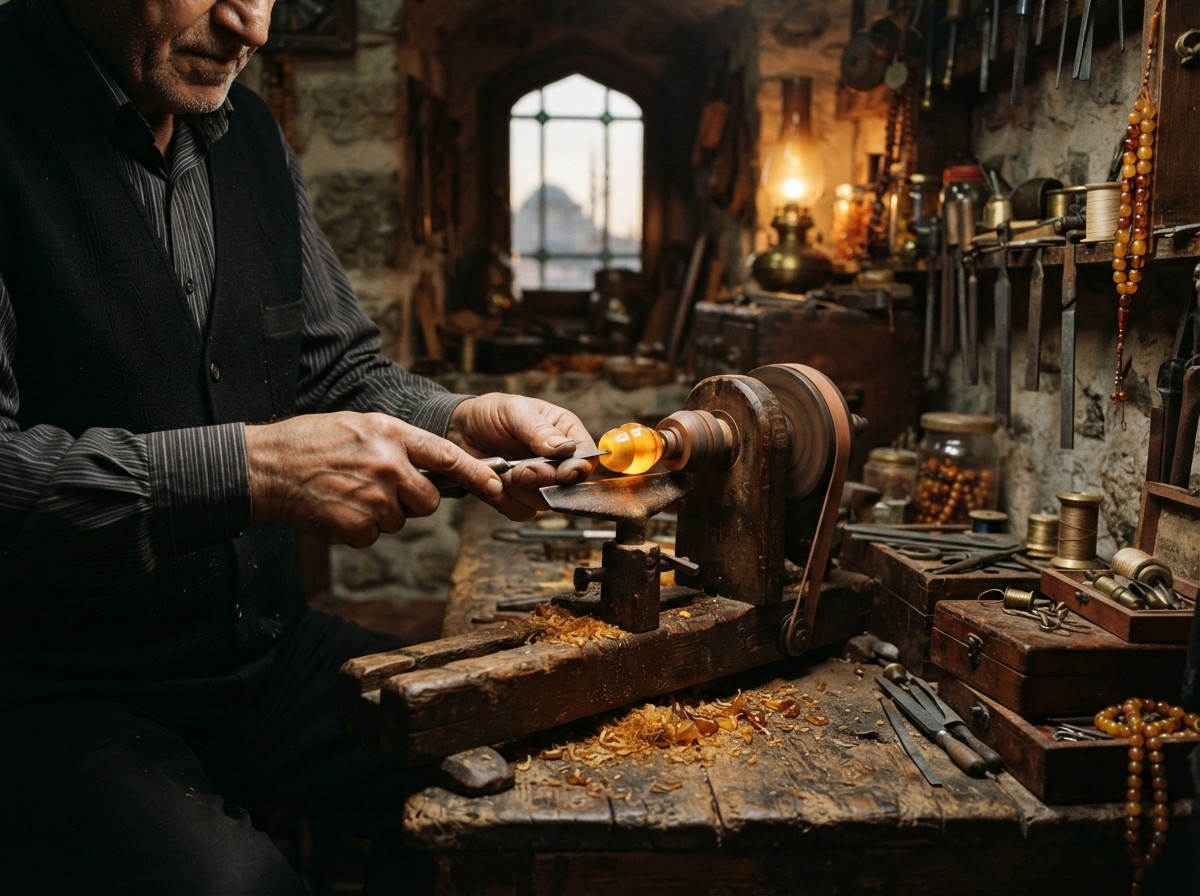
On a low-speed wooden hand lathe, the beads are brought to oval, round or barrel shapes by the master's precise hand.
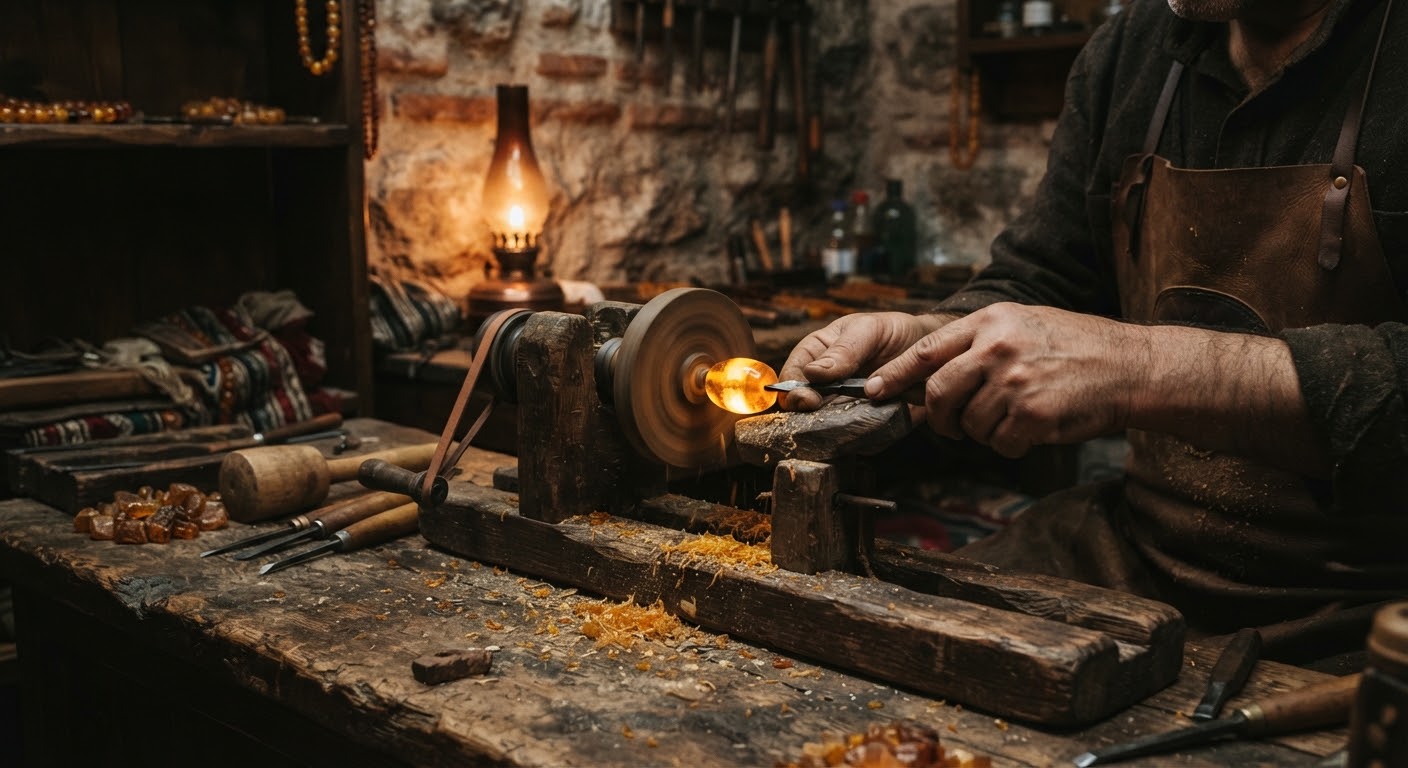
Workbench Low-Speed Wooden Hand Lathe
Form Oval and barleycorn cut
Hand Lathe
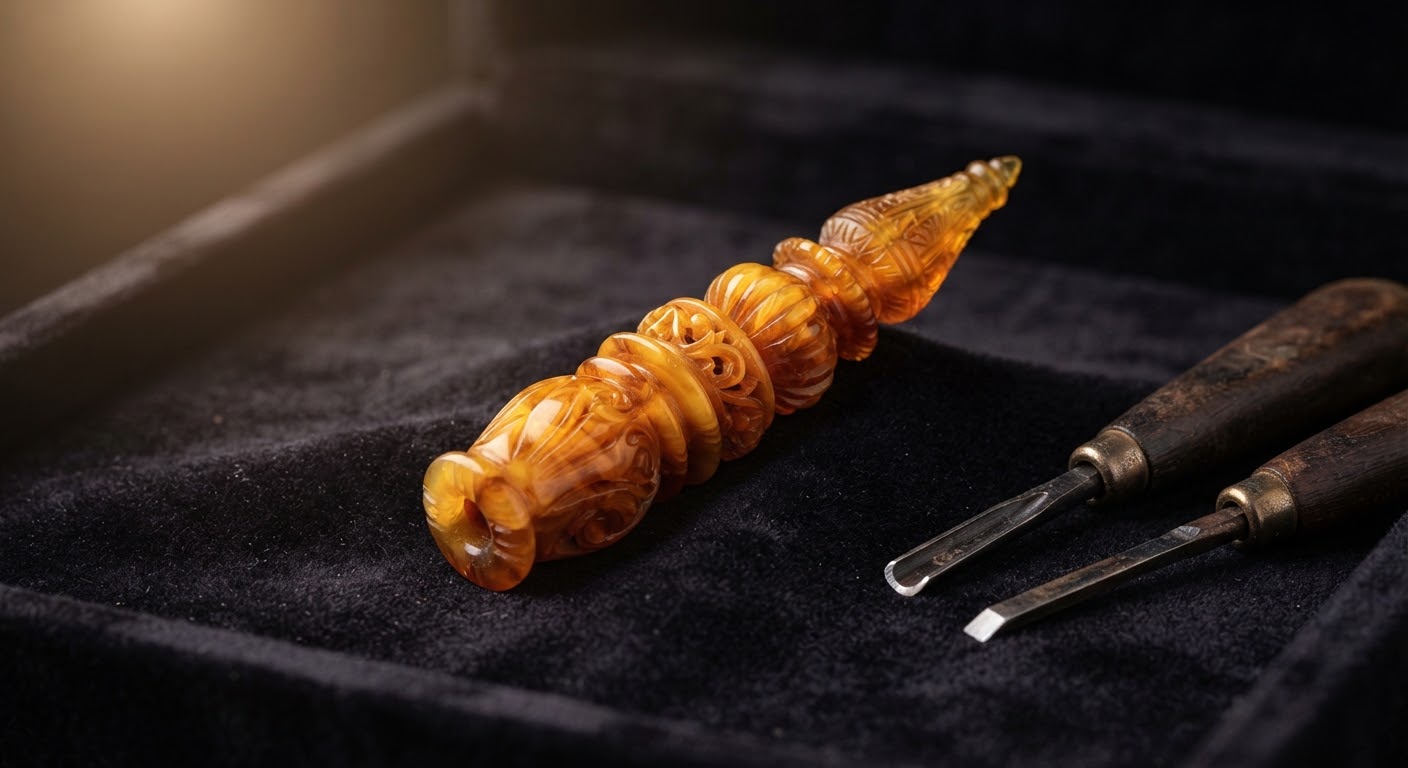
One-Piece Imame
Step IV • Imame

Imame and Finial Work

The imame (head bead), the most important part of the prayer beads, is carved as one piece from the same block, with fine collars and a hidden knot seat.

Feature One-piece, with a hidden seat
Finial & Spacers Classic Ottoman Collar Proportions
Step V • Stringing

Cord and Tassel (Final Touch)

A pure silk cord is passed through the beads and finished with a Trabzon woven or silver wire-woven tassel.
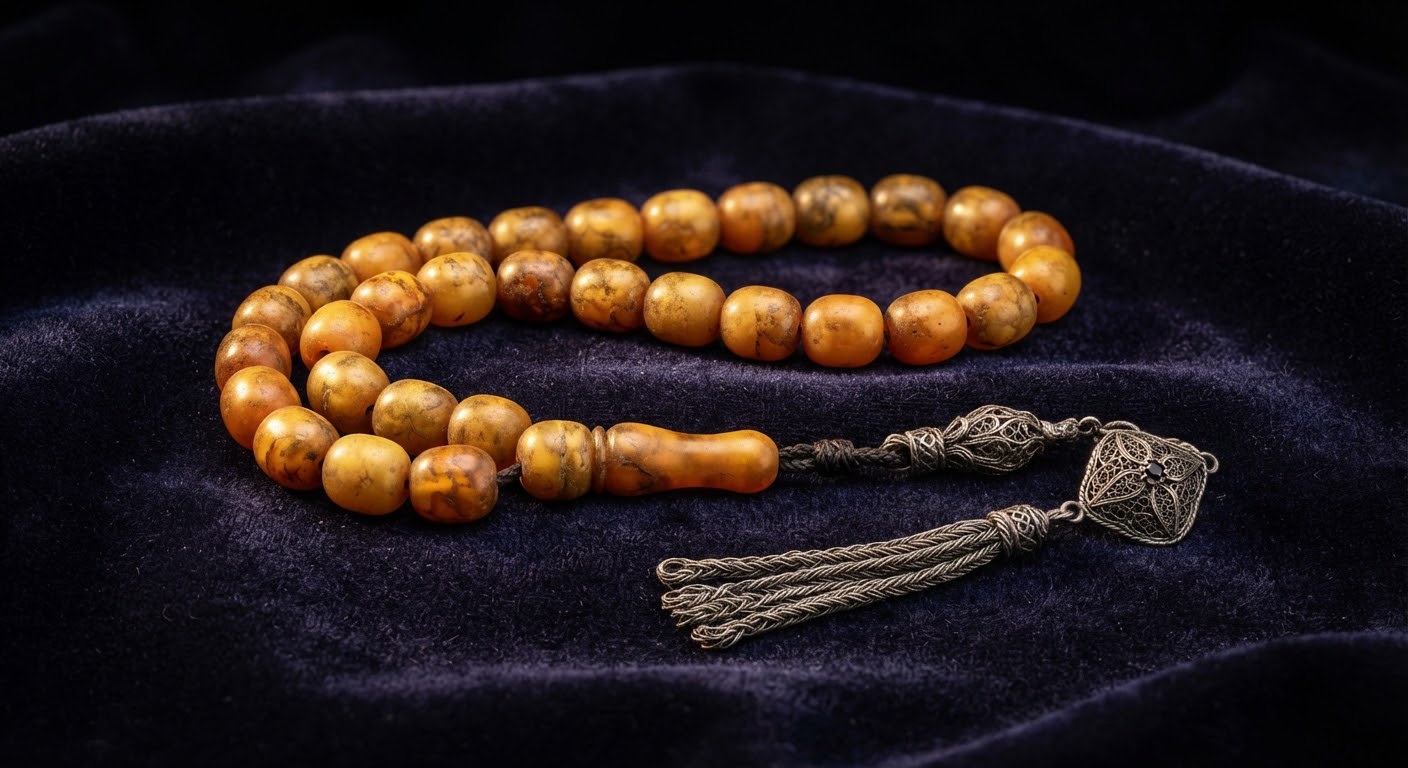
Cord Specially Twisted Pure Silk Cord
Tassel Fine silver (1000) filigree weave
Finished Prayer Beads · 33 Beads

Genuine Ottoman Material, One-Piece Production

❖
“No material used in our workshop is a modern synthetic resin or casting. Every bead is worked from pieces made at least a hundred years ago that have survived to this day. That is why every set of prayer beads signed by Bünyamin Düzgün is one of a kind.”
Bünyamin Düzgün Prayer Bead Master · Istanbul
Istanbul Workshop

The Bench of Amber and Patience

The workshop where century-old amber becomes prayer beads in the master's hands.

Hands working amber at the lathe
Workshop · Work in Progress
Hand Lathe0.02 mm
Fret SawCrack-Free
Hand PolishHigh-Gloss Polish

Tools of the Bench

01

Bow Lathe

A traditional wooden lathe turned to the rhythm of the master's arm, keeping friction heat to a minimum to preserve amber's natural scent.

02

Hand Polish and Blade

A smooth, lustrous finish given to each bead without synthetic abrasives, using a steel blade, a goat-hair brush and walnut-shell powder.

03

0.6 mm Cord Hole

A fine guide hole drilled so the silk cord runs freely without breaking.

04

Signature Seal and Hammer

The brass seal set with which the master stamps his signature on the imame and certificate of each finished piece.

Prayer Beads in Five Steps

The 5 stages that turn a raw block into prayer beads.

Step I: Selecting the Material
Step I

Selecting the Raw Material

The veining, pattern, scent and hardness of century-old Ottoman and Baltic blocks are carefully examined.

Step II: Cutting and Roughing Out
Step II

Cutting and Roughing Out

Using a fret saw and a vise, bead-sized cubes are sliced without cracking.

Step III: Shaping on the Lathe
Step III

Shaping on the Lathe

On the hand lathe, each bead is brought to the same size with the master's precise touch.

Step IV: Imame and Finial Work
Step IV

Imame and Finial Work

The one-piece imame with hidden collars, which defines the character of the prayer beads, is carved, and the spacers between the beads are set in place.

Step V: Cord and Tassel
Step V

Cord and Tassel

The cord, knotted with Bursa silk, is completed with a fine-silver kazaziye (Trabzon wire weave) tassel and a walnut box.

Workshop Visits

Our workshop is not a shop but a working atelier. To keep the master's rhythm undisturbed, we receive visitors by appointment only, at most two a day, at the atelier.

Hospitality

“Our guests are offered menengiç (terebinth) coffee brewed over embers in a copper cezve, and linden tea.”

Devotion to Prayer Beads and Their Tradition

“At our bench there is no room for haste, synthetic polish or mass-produced moulds. Every bead is worked one by one with the master's patience, becoming a keepsake to be passed down through generations.”

Bünyamin DüzgünIstanbul Workshop
Süleymaniye · Istanbul

Mimar Sinan Caddesi No: 18
Süleymaniye / Fatih — Istanbul

Weekdays: 10:00 — 18:30
(By appointment only)
© 2026 BÜNYAMİN DÜZGÜN · ALL RIGHTS RESERVED